Israeli Prime Minister Benjamin Netanyahu announced on Wednesday that his cabinet had authorized direct talks with Lebanon "as soon as possible." It is a step that Lebanon had repeatedly requested, but the two sides disagree on a fundamental question even before the negotiations begin — whether a ceasefire should be in effect during them. Jerusalem Post ↗
The meeting is scheduled for Tuesday, April 15, at the headquarters of the U.S. State Department in Washington. Negotiating for Israel will be Ambassador to the U.S. Yechiel Leiter, and for Lebanon, Ambassador Nada Hamadeh Moawad. The talks will be moderated by U.S. Ambassador to Lebanon Michel Issa — this is therefore a U.S.-moderated trilateral negotiation, not a classic bilateral summit. CBS News ↗
The paradox of negotiations under bombs
Leiter confirmed the Tuesday meeting on Friday, but at the same time declared that "Israel has refused to discuss a ceasefire with the terrorist organization Hezbollah." Netanyahu indicated that Israel wants to use the negotiations primarily to address the issue of Hezbollah's disarmament and the broader security arrangement. Israel's Chief of the General Staff added that the army would "continue to fight Hezbollah with great intensity." Jerusalem Post ↗
Lebanon holds the opposite position. Beirut has repeatedly stressed that it "will not negotiate under fire." Lebanese President Joseph Aoun and Prime Minister Nawaf Salam have asked the U.S. to mediate at least a temporary halt to the strikes before Tuesday's meeting. According to sources cited by Axios, Lebanon and the U.S. have asked Israel for a "gesture" in the form of a pause in airstrikes before the talks begin. Asharq Al-Awsat ↗
Wednesday's Israeli strikes on Lebanon, according to Al Jazeera, claimed at least 300 victims and more than 1,150 wounded, making it one of the bloodiest days of the conflict. Al Jazeera ↗
Beirut attempts to assert state control over the security agenda
A fundamental shift in the dynamics of the negotiations is the position of the Lebanese state. President Aoun and Prime Minister Salam have pushed the line that "the future of Lebanon is negotiated exclusively by the state, not by Hezbollah." The government has banned Hezbollah's military operations in Beirut and restricted weapons in the capital to legitimate security forces. Asharq Al-Awsat ↗
Hezbollah reacted sharply to this development. Member of Parliament Ali Fayyad rejected direct negotiations with Israel and insisted on a ceasefire as a condition for any further steps. Representatives of the movement accused Prime Minister Salam of "treason." Nevertheless, the party, which holds 15 parliamentary seats, faces growing pressure as the state takes control of both the security agenda and diplomacy. Al Jazeera ↗
Why this complicates U.S.-Iran negotiations
Lebanon has become, according to CBS News, "one of the most complex issues complicating the nascent diplomacy between the U.S. and Iran." At the heart of the problem is confusion over the scope of the ceasefire that Trump negotiated with Tehran. Several parties, including Pakistan, initially understood the agreement to apply to the entire Middle East, including Lebanon. However, after a phone call between Netanyahu and Trump, the American position changed — Lebanon was not included in the agreement. CBS News ↗
Iran's foreign minister accused the U.S. of "letting Netanyahu kill diplomacy." Vice President J.D. Vance admitted that Israel had promised to "tone it down a bit" in Lebanon, suggesting American pressure toward de-escalation. However, if Lebanon remains unresolved, it jeopardizes the entire framework of the U.S.-Iran negotiations currently taking place in Islamabad. CBS News ↗
France left out in the cold
An interesting detail is the exclusion of France from the negotiations. Paris had attempted to mediate talks between the parties, but Israel rejected the French initiative. According to the Jerusalem Post, Israel blamed Lebanon for failing to prevent Hezbollah attacks, which forced Israeli military operations on Lebanese territory, and did not consider French mediation to be strict enough. Jerusalem Post ↗
Tuesday's meeting will thus be a purely American-Israeli-Lebanese affair, reinforcing Washington's role as the sole mediator in the region.

Negotiations under bombs: Israel and Lebanon to meet in Washington without a ceasefire agreement
Videos
🔥 You might also like

Iran–Israel
Putin offered Iran help in mediating peace in the Middle East
Russian President Vladimir Putin, during a phone call with Iranian President Masoud Pezeshkian, said Moscow is ready to support peace med...

Iran–Israel
Netanyahu rejects Hamas rule in Gaza on attack anniversary
Israel officially marked the third anniversary of Hamas's October 7, 2023 attack on October 5. At a commemoration in Jerusalem, Prime Minister Benjamin Net...

Iran–Israel
Australia investigates the second pilot of Flydubai flight to Israel
Australian authorities are investigating a link between Australia and the second pilot of Flydubai, who reportedly attempted to take control of the aircraft bou …
Geographic locations


From our newsroom original
All →
MPs debate the budget, Kamenický rejects threat of provisional budget
Russian attacks on Ukraine claim at least 28 lives

Petr Pavel left for Morocco and will miss the municipal elections

Swedish court convicts two men over concealed Viking-era treasure, acquits third man accused of selling it
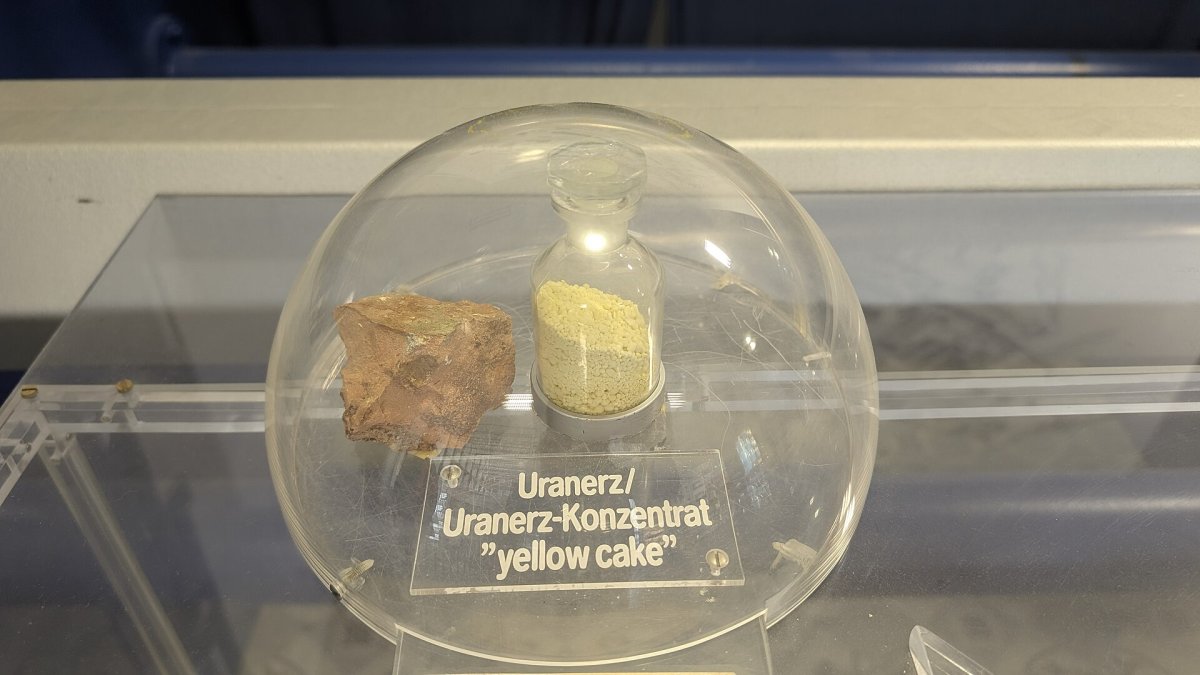
Man suspected of attempting to sell uranium-238 for $700,000 detained in Georgia

Amsterdam museum returned ancient vase to Sicily, theft revealed by 1976 wedding photo

Quebec: Separatists Win with 28% of the Vote and No Majority, Promise Referendum Only After Trump
What Europe Is Writing About: AfD Leads a State Parliament, Ex-BND Chief Arrested, Puigdemont May Return