




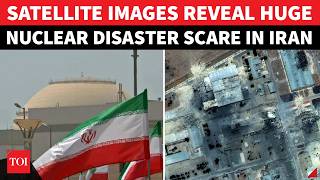

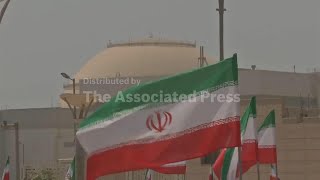
The International Atomic Energy Agency confirmed that Iran informed it on Friday of a third strike near the Bushehr nuclear power plant in the past ten days. According to the Iranian state agency Fars, a projectile hit the plant's grounds, outside the reactor itself, shortly before midnight local time. Iran blamed the attack on the "American-Zionist enemy," a term it traditionally uses for the US and Israel. The reactor was not damaged and there was no radiation leak. Al Arabiya ↗
The first strike on the Bushehr site was recorded on March 17, when a projectile landed about 350 meters from the reactor, hitting a facility with measuring instruments. The second attack came on March 24, with a projectile landing near a pumping station close to the first operational unit. The third strike on March 28 closes out a worrying series of hits on nuclear infrastructure, ranking among the most serious incidents of their kind in modern history. Al Arabiya ↗
IAEA chief Rafael Grossi warned that the attacks on Bushehr cross the "reddest line" of nuclear safety. Grossi stressed that a direct hit on the operating reactor could cause a serious radiological accident affecting large areas of Iran and neighboring states. The reactor contains 72 tons of nuclear fuel and 210 tons of spent fuel, representing a large quantity of radioactive material whose release could lead to extensive contamination. According to Grossi, the possibility of radioactivity dispersing into the atmosphere would be very high if a strike were to reach the reactor core. The Hill ↗
The IAEA also confirmed that it had not recorded any increase in radiation levels above normal background in neighboring countries. Grossi called on all parties to the conflict for maximum military restraint and recalled the seven pillars of ensuring nuclear safety during armed conflict — the basic rules meant to prevent damage to reactors and the release of radiation. The Hill ↗
The Russian state company Rosatom, which built the plant, responded to the escalating attacks by evacuating personnel. After the second strike, 163 workers left Bushehr heading toward the Iran-Armenia border, with roughly 150 more having already been evacuated in previous days after the conflict began. About 300 people remain on site, of whom only a few dozen will oversee the facility. Rosatom has also suspended construction of two new reactors at the Bushehr site. Moscow Times ↗
The Russian Ministry of Foreign Affairs accused the US and Israel of a deliberate attempt to trigger a nuclear catastrophe, calling the attacks a "reckless and irresponsible manifestation of a catastrophic course." Moscow has direct interests in Bushehr — the plant was brought into operation in 2011 after decades of Russian-Iranian cooperation, and Russia has supplied the nuclear fuel. Al Jazeera ↗
The Israeli military did not directly comment on the attacks on Bushehr, but announced that as part of its operations it had struck the heavy-water reactor at Arak and a uranium processing facility in Ardakan, in Yazd province. According to the IDF, this is the only facility in Iran where raw uranium is processed into a form suitable for further enrichment. The Hill ↗
Bushehr is Iran's only operating nuclear power plant and produces approximately six percent of the country's electricity. IAEA inspectors have not had access to Iranian nuclear sites since July 2025 — the agency thus relies solely on information from Tehran, without any possibility of independent verification. Middle East Monitor ↗

Bushehr Under Fire: Three Attacks in Ten Days Threaten Iran's Only Nuclear Power Plant
Videos
🔥 You might also like

World Politics
Turkey and Pakistan are sending troops to Saudi Arabia. Yemeni government says it controls Bab al-Mandab
Saudi Arabia bombed Yemen’s capital again, rebels say. According to Reuters, Riyadh wants to seize the strait through which a third of container traffic passes.

European Union
What Europe Is Writing About: AfD Leads a State Parliament, Ex-BND Chief Arrested, Puigdemont May Return
AfD for the first time at the head of a state parliament, former BND chief Hanning arrested, Puigdemont's arrest warrant lifted, and drones over ships near Bulg …

Ukraine
According to OSINT images, a span of the Chonhar Bridge has collapsed. No confirmation yet
According to Dnipro OSINT, a 30 September satellite image shows a collapsed bridge span on the road to Crimea. It has not yet been independently confirmed.


From our newsroom original
All →
European Commission in Strasbourg proposes new rules for EU enlargement

Russian drones hit a civilian corn-carrying ship in the Black Sea

Another candidate withdraws from the race for the Prešov region

Asos customers received an alleged hack alert in the app. The company has not confirmed it

Ceuta: Trampolín beach is cleared before the king arrives, judge sees indications against senior officials

What Slovakia Is Writing About: Coalition Agrees on Budget with 4.94% Deficit, Transaction Tax to Fall Only in 2028. SNS Sticks with Kuffa

What Europe is writing about: US sends third aircraft carrier to Iran, OpenAI fires three after leak, South Korea demands apology from Kyiv

What Europe is writing about: Russia attacked Kyiv overnight, Romanian parliament votes on Mureșan's government, Italy renews pact with Egypt after Regeni case