


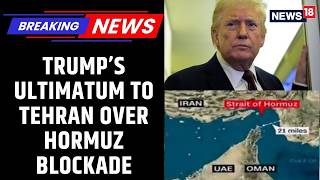
On Monday morning, US President Donald Trump ordered the postponement of all military attacks on Iranian power plants and energy infrastructure by five days. On the social network Truth Social, he stated that the United States and Iran had "very good and productive talks over the weekend about a complete and total resolution of hostilities in the Middle East" and that there was "15 points of agreement." Trump's envoys Steve Witkoff and Jared Kushner reportedly led intensive negotiations on Sunday evening. Al Jazeera ↗ NBC News ↗
However, Iran categorically denied any negotiations. Iran's Ministry of Foreign Affairs declared via state broadcaster: "There is no dialogue between Tehran and Washington." Iranian state media interpreted Trump's move as a retreat — claiming that the American president "backed down" after a firm Iranian response. According to Iran's Ministry of Foreign Affairs, Trump's claims of productive talks were an attempt to calm energy markets and buy time to carry out military plans. Al Jazeera ↗ NPR ↗
Despite the alleged talks, American and Israeli air forces continued extensive strikes across Iran, which Al Jazeera described as "unprecedented." On Monday morning, loud explosions were heard in Tehran — Israel struck regime infrastructure, including government buildings and communication facilities. Trump simultaneously set a condition: for a deal to be reached, Iran must give up its stockpiles of enriched uranium. Al Jazeera ↗ CNN ↗
Diplomatic activity behind the scenes is intense. Turkey and Egypt are mediating indirect communication between Washington and Tehran. According to NBC News, several messages were exchanged between the sides in recent days aimed at de-escalating tensions. Iran requested that the talks be moved from Turkey to Oman, and Washington agreed. Qatar, Turkey, and Egypt presented Iran with a proposal that includes halting uranium enrichment for three years and limiting ballistic missiles. NBC News ↗ Al Jazeera ↗
Trump's announcement had an immediate impact on oil markets. The price of Brent crude fell by more than 7 percent to $103.73 per barrel after exceeding $112 on Friday. However, analysts warn that the relief may only be temporary. The Executive Director of the International Energy Agency (IEA), Fatih Birol, warned on Monday that the situation in the Middle East is "very serious" and worse than both oil shocks of the 1970s combined with the impacts of Russia's war in Ukraine on the gas market. The IEA announced that its 32 member countries will release a record 400 million barrels of oil from strategic reserves — however, given a daily shortfall of 15 to 20 million barrels from the Strait of Hormuz, these reserves would last only about 26 days. CNBC ↗ CNN ↗
On the Lebanese front, Israeli Finance Minister Bezalel Smotrich called for the annexation of southern Lebanon and threatened to turn the southern suburbs of Beirut into "another Gaza." Israel continues to destroy bridges over the Litani River, which the Lebanese president described as preparation for a ground invasion. More than 1,000 people have died in Lebanon since the conflict began, and more than a million have been displaced. CNN notes that while Hezbollah is involved in the conflict, it is now only a "shadow" of the force it once was. Al Jazeera ↗ CNN ↗
The war is entering its fourth week with no clear indication of resolution. Trump presents himself as a peacemaker, but his ultimatums and subsequent concessions create an impression of improvisation. Iran refuses direct negotiations and continues retaliatory strikes. The international community, including China, warns of an "uncontrollable situation." Analysts at Rystad predict that if the war lasts four months, the price of Brent crude could reach $135 per barrel by June. Bloomberg ↗ CNBC ↗
UPDATE 19:00: Despite Trump's announcement of postponing the attacks, Israel launched a second wave of airstrikes on Tehran on Monday afternoon. Al Jazeera's correspondent in the Iranian capital reported unprecedented explosions, particularly on the eastern side of the city. Iran's Red Crescent reported that more than 80,000 residential buildings have been hit since the conflict began, with some completely destroyed. At least six people died in attacks on residential buildings in Tabriz, and one child was killed in Khorramabad. Trump's original 48-hour ultimatum to open the Strait of Hormuz expires today at 23:44 GMT — that is, at 0:44 Central European time on Tuesday. Al Jazeera ↗ Al Jazeera ↗
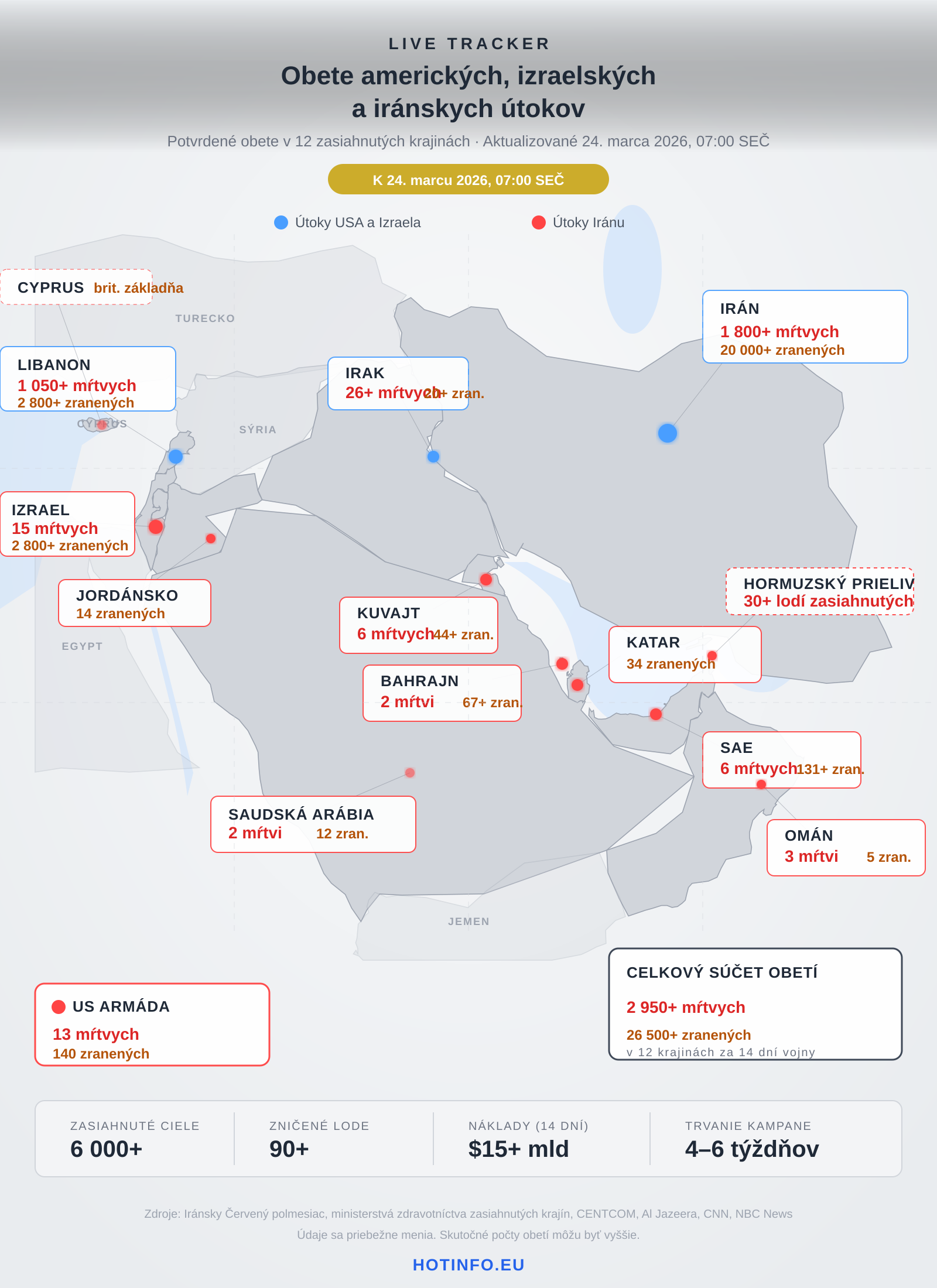
Day 25: Trump backs off ultimatum and postpones attacks on Iranian power plants. Tehran denies any negotiations
Videos
🔥 You might also like

Iran–Israel
Netanyahu rejects Hamas rule in Gaza on attack anniversary
Israel officially marked the third anniversary of Hamas's October 7, 2023 attack on October 5. At a commemoration in Jerusalem, Prime Minister Benjamin Net...

Iran–Israel
Australia investigates the second pilot of Flydubai flight to Israel
Australian authorities are investigating a link between Australia and the second pilot of Flydubai, who reportedly attempted to take control of the aircraft bou …

Iran–Israel
Investigation launched into incident aboard Flydubai flight from Dubai to Tel Aviv
The Attorney General of the United Arab Emirates ordered an investigation into a serious incident aboard a Flydubai aircraft flying from Dubai...


From our newsroom original
All →
European Commission in Strasbourg proposes new rules for EU enlargement

Russian drones hit a civilian corn-carrying ship in the Black Sea

Another candidate withdraws from the race for the Prešov region

Asos customers received an alleged hack alert in the app. The company has not confirmed it

According to OSINT images, a span of the Chonhar Bridge has collapsed. No confirmation yet

Trump approves execution of Fort Hood shooter by firing squad. Army would carry out first execution since 1961
Ceuta: Trampolín beach is cleared before the king arrives, judge sees indications against senior officials

Federal troops reportedly enter Tigray's capital, witnesses say. Ethiopian government has not confirmed it, and front leader vows further strikes